The little boy was paralyzed. The doctor advised the family to get THIS dog… Everyone was shocked by what the dog did when she saw the child…
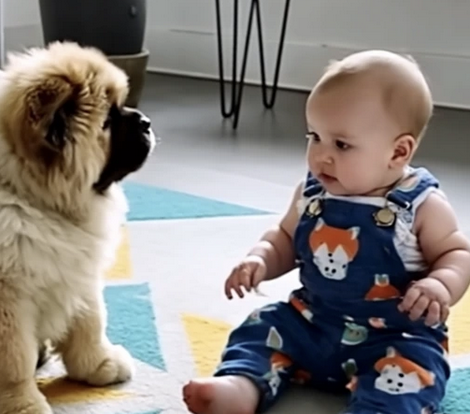
The little boy was paralyzed. The doctor advised the family to get THIS dog… Everyone was shocked by what the dog did when she saw the child…
At first, no one understood what they were seeing. /The dog was gently nibbling exactly those parts of little Máté’s body that were paralyzed\./
“What is this?! Pull her away, don’t let her hurt him!” cried the mother, Eszter, rushing over in fear.
But as they looked closer, they noticed something that swept away all their earlier fears: Máté wasn’t crying. In fact—he was smiling. For the first time in his life.
“Do you realize this is the first time… he’s smiling?” whispered Zoltán, the father, tears in his eyes.
The dog, Bella—a special chow-chow mix with a purple tongue—continued to gently nibble at Máté’s legs, softly, as if playing. And the little boy just laughed, his quiet giggle filling the room.
Weeks passed. One day, Eszter was bathing Máté when something incredible happened.
“Wait a second…” she murmured softly while washing the boy’s leg.
The toes on his left foot… moved.
“Zoli! Zoltán, come here, quick!”
Zoltán rushed into the bathroom.
“What happened?”
“It moved. His toe… it moved!”
They stood there in silence, swallowing their tears as they watched: Máté’s tiny toes were really moving. Small, barely noticeable—but unmistakably real.
The next day, they went to see Dr.
“Can you explain what happened?” Eszter asked, holding Máté in her arms at the clinic.
Dr. Ilona nodded.
“It appears that Bella—the dog—instinctively found the exact points where nerve and muscle stimulation was needed. These gentle bites act like a combination of acupuncture and massage… and on top of that, there’s the emotional bond. The dog’s love, attention, and closeness became a real therapy.”
Zoltán could hardly believe it.
“Are you saying that… this dog—this simple dog—achieved more than months of physiotherapy?”
“So far, that’s what it looks like. And it’s something truly wonderful.
Advertisement
From that moment on, Bella became Máté’s “home physiotherapist.” Every morning, the dog lay beside the boy’s bed, and as soon as he woke up, the daily “treatment” began. Bella gently nibbled Máté’s legs, thighs, sometimes even his hands—always knowing exactly where to help.
Eszter often just watched them, deeply moved.
“Look at them, Zoli. It’s like they’re talking to each other—without words.”
Zoltán nodded.
“Because they really are. This dog knows exactly what she’s doing.”
Sometimes, when Máté managed to lift a leg or shift himself a few centimeters, Bella would whimper softly and snuggle up to him, as if congratulating him.
And the progress didn’t stop. Over the months, Máté moved more and more. Not only his toes, but his ankles and knees began to respond. He learned to crawl—and soon started using his arms to move as well.
One day, Eszter said quietly:
“This is no longer a miracle. This is… a gift.”
Zoltán wrapped his arms around her.
“The greatest gift we’ve ever received.”
Six years have passed since Bella entered Máté’s life. Today, the boy is a lively, endlessly energetic six-year-old who—according to him—“can even run if he’s late for the snack break at school.”
One autumn morning, Eszter stood by the window with a thermos of tea, watching Máté step into the yard with his school backpack.
“Don’t forget your gym bag!” she called after him.
“It’s on Bella’s neck!” Máté replied cheerfully.
And indeed—the loyal dog, her muzzle now slightly gray, proudly carried the bag in her mouth, as if fulfilling the most important mission of her life.
Zoltán stepped up beside his wife and spoke softly.
“Do you remember the day his little toe moved?”
“Like it was yesterday…” Eszter smiled.
“And now? He’s in school. Look at him. That child… is running.”
Eszter nodded, overcome with emotion.
“He’s running. And the world’s wisest dog is walking right beside him.”
The House of Hope has since grown into a nationally renowned center. Every year, hundreds of children are given a chance to start over—with the help of animals.
“That’s her,” visitors say. “That’s the famous Bella.”
Dr. Ilona regularly gives lectures about the method.
“The essence isn’t the miracle—it’s love. The unconditional love of animals can crack even the deepest walls of paralysis.”
Máté often returns to the center—not just for therapy, but as a helper.
“Hey, little buddy, listen,” he recently encouraged a boy in a wheelchair. “I couldn’t do it at first either. But Bella helped me. And she’ll help you too.”
The little boy looked shyly at Bella, who padded over and sat beside him. The boy smiled—wearing the same first smile Máté had worn six years earlier.
One evening, as darkness fell, Máté and Bella sat together in the garden. The dog breathed slowly and calmly, resting her head in Máté’s lap. The boy stroked her ears.
“You’ll stay with me forever, right?” he asked softly.
Bella blinked once, as if to say: as long as I can.
Zoltán stood behind the window, a mug of coffee in his hand. Eszter joined him, and together they watched.
“Strange that all this started with a doctor’s advice…” Eszter said.
“Yes. A dog. A good dog.”
“The best.”
Their story became a lasting memory—not only for the parents, doctors, and therapists, but for everyone who had ever lost hope and then found it again in a tail-wagging, tongue-out little four-legged friend.
Today, if anyone in the city of Codla sees the logo of the House of Hope, they know exactly what it means: a child, a dog, and the greatest force in the world—love.
2026. január 27. (kedd), 14:55